

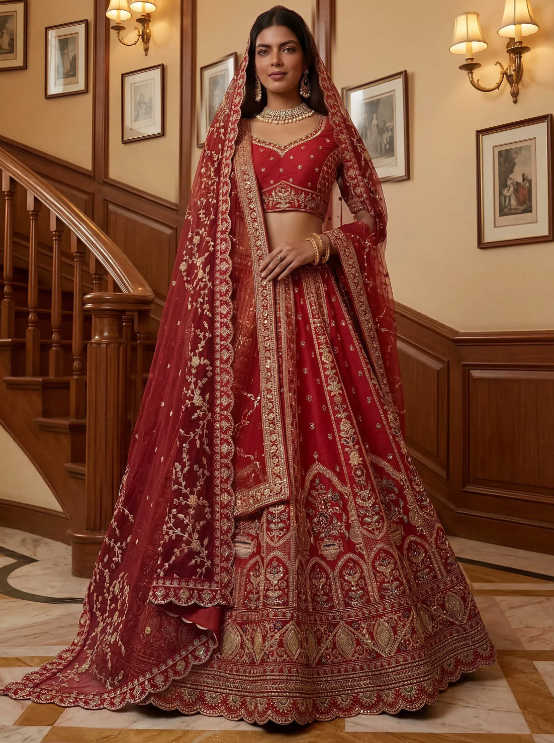
Red remains the most traditional and enduring choice for Indian brides, and choosing a red bridal lehenga involves several important decisions beyond color alone. Fabric, embroidery style, and silhouette all shape how the finished outfit ultimately looks and feels.
Given the significance and cost typically involved, taking time to understand these elements before purchasing helps ensure the outfit meets both aesthetic expectations and practical comfort needs for a long wedding day.
Choosing the Right Shade of Red
Red spans a wide range, from bright vermillion to deeper maroon-leaning tones. Considering how each shade photographs under different lighting conditions helps brides choose a tone that will look consistent across the entire wedding day.
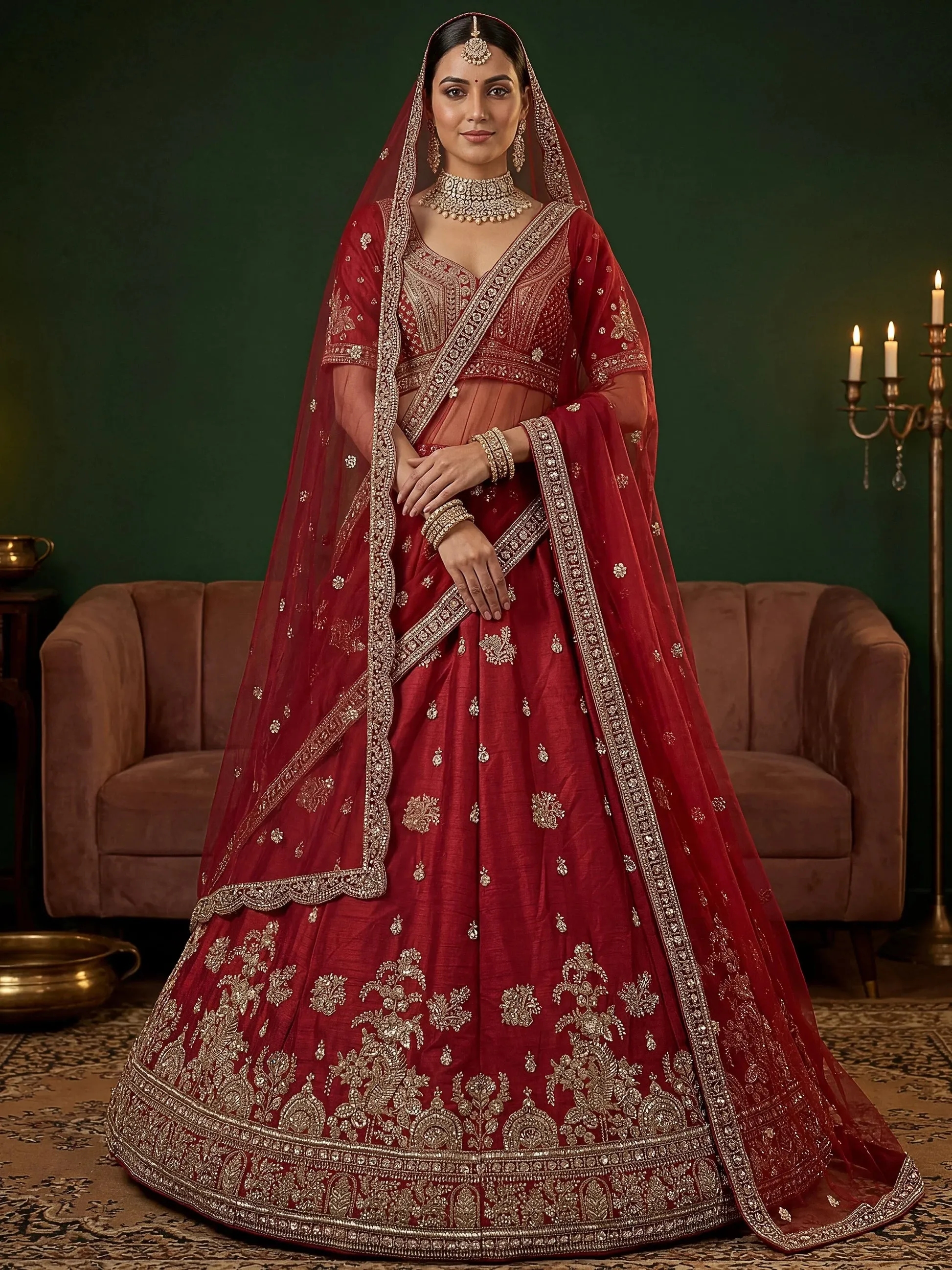
For brides wanting maximum traditional impact, a Heavy Bridal Lehenga Choli option typically combines dense embroidery with a fuller silhouette, delivering the elaborate, statement-making appearance many associate with a classic Indian wedding ceremony.
Fabric Options for Bridal Wear
Silk remains the classic choice for bridal lehengas, offering structure and a natural sheen that photographs beautifully. Velvet provides added richness for winter weddings, while georgette offers a lighter alternative for warmer climates.
-
Choose silk for classic structure and shine.
-
Try velvet for winter weddings and colder venues.
-
Consider georgette for lighter, warm-weather comfort.
-
Check lining quality for heavily embellished pieces.
Understanding Embroidery Techniques
Zardozi, resham, and dabka work each create distinct textures and levels of shine. Understanding these techniques helps brides communicate preferences clearly with designers or compare quality accurately across different bridal collections.
Denser embroidery adds weight, which can affect comfort across a long wedding day involving multiple rituals. Balancing embroidery density with practical wearability is worth discussing directly with the designer or seller before finalizing an order.
Silhouette Choices for Different Body Types
A fuller, more flared skirt suits brides wanting a dramatic, traditional silhouette, while a slightly fitted mermaid-style cut offers a more contemporary alternative. Both styles can carry heavy embroidery depending on personal preference.
-
Choose a flared skirt for traditional, dramatic movement.
-
Try a fitted silhouette for a modern bridal look.
-
Consider a cape or jacket layer for added drama.
-
Test movement and comfort before the actual wedding day.
Planning for Comfort Across a Long Wedding Day
Bridal outfits often need to be worn for many hours across multiple rituals, making comfort planning essential. Discussing weight distribution and blouse support with the designer in advance helps prevent discomfort later in the day.
Some brides choose to have a slightly lighter secondary outfit for later reception hours, allowing the heaviest, most elaborate piece to be worn only for the core ceremony portions of the event.
Working With a Designer or Tailor
Bringing reference images and being specific about embroidery density, fabric preference, and comfort needs helps designers create an outfit closer to expectations, reducing the number of revision rounds needed before the final fitting.
Scheduling the final fitting close enough to the wedding date to reflect any last-minute body changes, but with enough buffer for adjustments, helps avoid fit issues appearing only on the wedding day itself.
Preserving the Outfit After the Wedding
Given the emotional and financial investment involved, many brides choose professional preservation services after the wedding, protecting delicate embroidery and fabric from long-term damage caused by improper storage conditions.
Some brides also repurpose elements of the lehenga, such as the dupatta, into other garments for future occasions, extending the outfit’s value well beyond the single day it was originally created for.
Budgeting for a Bridal Lehenga
Setting a realistic budget early in the process, and communicating it clearly with designers, helps narrow choices efficiently without wasting time exploring options well outside a comfortable financial range.
Allocating slightly more budget toward fabric and construction quality over sheer embellishment quantity often results in an outfit that photographs and wears better across the entire wedding day.
Conclusion
Choosing a red bridal lehenga involves far more than selecting a shade of red. Fabric, embroidery technique, and silhouette all shape the outfit’s final appearance and how comfortably it can be worn across a long wedding day.
Taking time to understand these elements, and discussing comfort openly with designers or sellers, helps brides arrive at an outfit that feels as considered and comfortable as it looks in photographs.